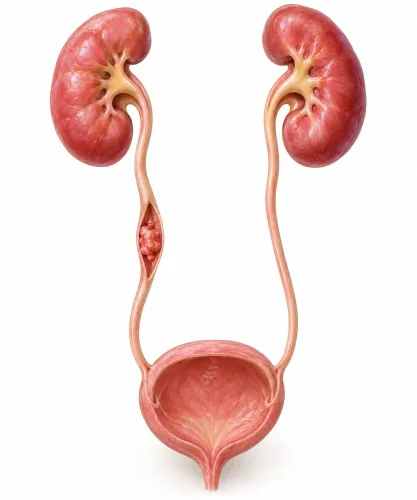
Red, pink or cola-coloured urine can result from cancer, infection, stones, medicines or bleeding outside the urinary tract. The pattern matters, but even one painless episode that disappears deserves medical assessment; by the end, you will know what requires urgent care and how clinicians investigate the cause.
Key takeaways
- Visible blood in urine needs prompt assessment, even without pain.
- Clots, heavy bleeding, inability to urinate or severe pain require urgent care.
- Urine tests, imaging and cystoscopy help identify the bleeding source.
- Smoking, age, persistent bleeding and abnormal tests can increase cancer concern.
What can the colour, timing and amount of blood tell you?
Gross haematuria means blood you can see, from pink urine to red urine. It deserves prompt medical assessment even when painless, because bladder cancer can cause visible bleeding before other symptoms appear.
Microscopic haematuria means red blood cells found on urine microscopy when the urine looks normal; a positive dipstick alone is not confirmation because it also detects haemoglobin and myoglobin.
- Pink urine usually indicates a smaller visible amount of blood, but it does not make the finding harmless.
- Red urine can contain more blood, yet the amount does not show how advanced a cancer is.
- Cola-coloured urine can reflect blood or pigment from another urinary problem, so colour alone cannot identify the source.
- Blood clots show that bleeding has occurred and can block urine flow, even when the underlying cause is not cancer.
Bleeding that comes and goes still needs evaluation. A bladder tumour can bleed intermittently, so clear urine between episodes does not cancel the risk. Conversely, heavy bleeding does not prove cancer; doctors assess the cause using the urine findings, your risk factors and appropriate tests.
Seek urgent care if clots prevent you from passing urine, bleeding remains heavy, or you develop severe pain, fever, vomiting, dizziness or fainting. A normal earlier assessment also does not make new visible blood or persistent microscopic haematuria irrelevant.
Which conditions can cause blood in the urine besides bladder cancer?
Blood in the urine can result from several conditions besides bladder cancer. The pattern may offer clues, but it cannot confirm the cause.
| Cause | How it can resemble bladder-cancer bleeding | Clues that point elsewhere |
|---|---|---|
| Urinary infection | Pink or red urine with urgency, frequency or burning | Fever, cloudy or strong-smelling urine; urine culture confirms infection |
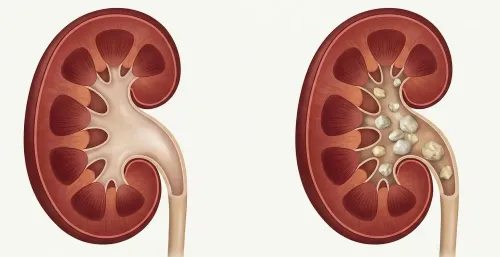
| Kidney stones | Visible haematuria, sometimes with clots | Severe, wave-like flank or abdominal pain, nausea or vomiting |
| Prostate disease | Bleeding with urinary difficulty or frequent night-time urination | Enlarged or inflamed prostate, weak stream or trouble starting |
| Vigorous exercise | Temporary haematuria after strenuous running or training | It clears after rest; it still needs review if it returns |
| Menstruation or vaginal bleeding | Blood can contaminate a urine sample or appear to come from the urinary tract | Blood on a pad or tissue rather than mixed through the urine |
| Anticoagulants | Medicines such as warfarin, apixaban or rivaroxaban can increase visible bleeding | A medication review identifies the risk; do not stop treatment without medical advice |
An infection may explain haematuria, but arrange repeat urinalysis after treatment. Persistent or recurrent blood requires urological assessment.
Bleeding that stops does not prove the cause was harmless. Visible haematuria deserves prompt assessment, especially when it is painless or intermittent, because anticoagulants, exercise or an apparent infection can coexist with another urinary-tract problem.
When does haematuria require urgent care?
After the first episode of visible blood, arrange prompt medical assessment, even if it was painless, brief, or disappeared. Do not wait for a second episode: bladder bleeding can stop and restart, and the absence of pain does not make it harmless.
| Situation | What to do | Why it matters |
|---|---|---|
| First visible episode | Contact a doctor or urology service promptly for urine testing and assessment. | A single episode still needs evaluation. |
| Blood clots in urine, inability to pass urine, or heavy bleeding | Go to an emergency department immediately. | Clots can block urine flow, and ongoing blood loss needs rapid treatment. |
| Severe flank pain, fever, vomiting, dizziness, or fainting | Seek emergency assessment rather than waiting for an appointment. | These symptoms can signal obstruction, infection, significant bleeding, or illness affecting the whole body. |
If a urine infection is suspected, provide a urine sample for culture and complete the prescribed treatment. Arrange repeat urinalysis after treatment; persistent or recurrent blood requires urological evaluation rather than repeated antibiotics without review.
Call emergency services if you feel faint, cannot keep fluids down, or cannot urinate. Do not drive yourself after fainting or with severe dizziness. A previous normal scan or bladder examination does not make new visible bleeding irrelevant: report it again, particularly when it persists, returns, or comes with new urinary symptoms.
How do doctors investigate blood in the urine?
A positive urine dipstick does not prove microscopic haematuria. It detects blood pigments as well as intact red cells, so doctors confirm the result with urine microscopy. At least 3 red blood cells per high-power field in a properly collected sample meets the usual definition of microhaematuria.
- You provide a clean-catch urine sample for urine microscopy and urine culture. If the culture identifies infection, treatment is followed by repeat urine testing; blood that persists needs further evaluation.
- Kidney-function blood tests show whether the kidneys are affected and whether contrast imaging is suitable.
- Imaging examines areas a camera cannot reach. CT urography gives detailed images of the urinary tract above the bladder; ultrasound uses no radiation and may suit selected lower-risk assessments.
- Cystoscopy uses a thin camera passed through the urethra to inspect the bladder lining directly. Doctors may also send urine cytology to look for high-grade urothelial cancer or carcinoma in situ.
A scan cannot replace cystoscopy in every case because small, flat or surface bladder lesions may not show clearly on imaging. A negative urine cytology result also cannot exclude a small or low-grade tumour. Cystoscopy remains the direct test of the bladder lining, especially when bleeding is visible, recurrent or unexplained.
What makes bladder-cancer evaluation more or less urgent after the first tests?
Age, tobacco exposure and the pattern of bleeding help determine whether follow-up is routine or needs prompt cystoscopy and upper-tract imaging. A urine infection does not end the evaluation: after culture-directed treatment, repeat urinalysis confirms that the blood has cleared.
Factors that raise concern include:
- Older age, especially with visible haematuria or a substantial number of red blood cells on microscopy.
- Tobacco exposure, including a long or heavy smoking history.
- Occupational chemicals, particularly aromatic amines used in dye, rubber, leather and printing industries.
- Previous pelvic radiation or treatment with cyclophosphamide.
- Persistent or recurrent haematuria after infection treatment, a negative initial explanation or a previously normal work-up.
- Recurrent urinary symptoms such as urgency, frequency or burning without a positive culture, or symptoms that return despite appropriate treatment.
These bladder-cancer risk factors can move microscopic haematuria from a repeat-urine plan to cystoscopy and CT urography. The exact pathway also depends on sex, the amount of blood and whether bleeding was ever visible.
A normal first evaluation lowers concern but does not provide permanent clearance. New visible blood, increasing microscopic blood or recurrent urinary symptoms deserves reassessment. Bring prior urine cultures, scan reports, cystoscopy findings and medication details to Dr Zaffar Sayed Urologist so the next decision reflects your actual history rather than starting from zero.
Related service
Uro-Oncological Management Urologic oncology is the field of medicine concerned with the research and treatment of cancers of the urinary system for both genders, as well as... View service → |
Frequently asked questions
What can the colour, timing and amount of blood in urine tell you?
Pink, red or cola-coloured urine indicates visible bleeding, but colour alone cannot identify its source. Blood throughout urination, clots, repeated episodes and the amount of bleeding provide clues without confirming a diagnosis.
Which conditions can cause blood in the urine besides bladder cancer?
Urinary infections, kidney stones, kidney disease, prostate enlargement, urinary injury, strenuous exercise and some medicines can cause haematuria. Menstrual or vaginal bleeding can also be mistaken for blood in urine.
When does haematuria require urgent care?
Seek urgent care for heavy bleeding, blood clots, inability to pass urine, severe flank or abdominal pain, fever with urinary symptoms, dizziness or weakness.
How do doctors investigate blood in the urine?
Doctors review your symptoms, medicines and risk factors, then use urinalysis, urine microscopy, urine culture and blood tests. Depending on findings, they may order ultrasound or CT urography and inspect the bladder with cystoscopy.
What makes bladder-cancer evaluation more or less urgent after the first tests?
Persistent or visible haematuria, unexplained recurrent bleeding, smoking history, older age, abnormal imaging or atypical urine cells increase concern. A confirmed infection that resolves after treatment lowers concern, but recurrent bleeding still needs reassessment.