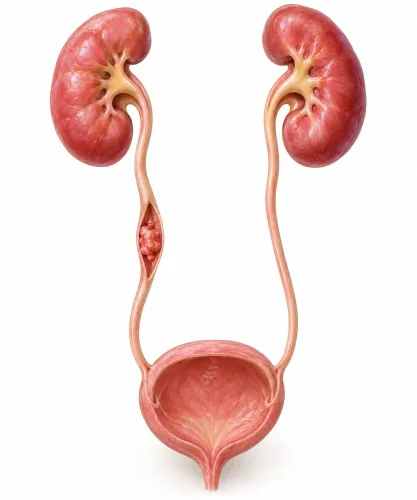
Persistent pelvic or genital discomfort can have several possible causes. When pain continues, repeatedly returns, or is accompanied by urinary or sexual symptoms, a structured medical evaluation can help identify relevant contributing factors.
Chronic pelvic pain is not always caused by infection or a problem with the prostate. Assessment may involve the urinary tract, pelvic floor, sexual function, pain mechanisms and other possible causes before an individual treatment plan is considered.
What Is Chronic Pelvic Pain Syndrome?
Chronic pelvic pain describes pain or discomfort that persists or repeatedly returns in the pelvic or genital region.
In some men, symptoms may fit a condition known as chronic prostatitis/chronic pelvic pain syndrome (CP/CPPS) or primary prostate pain syndrome.
Importantly, chronic pelvic pain does not automatically mean that there is an ongoing infection.
The EAU describes chronic primary pelvic pain as pain occurring without a proven infection or another obvious local condition that adequately explains the symptoms. It may occur together with urinary, sexual, bowel or emotional symptoms.
Where Can the Pain Be Felt?
The location and character of pain can vary considerably.
Discomfort may be experienced in:
- The area between the scrotum and anus (perineum)
- Lower abdomen or pelvis
- Penis
- Testicles or scrotum
- Around the anus
- Lower urinary tract
- Lower back or nearby pelvic areas
Some men describe:
- Aching
- Burning
- Pressure
- Tightness
- Intermittent discomfort
- Pain associated with urination
- Pain associated with ejaculation or sexual activity
Symptoms may fluctuate and may not be present continuously.
What Symptoms Can Occur Along With Pelvic Pain?
Depending on the individual, chronic pelvic pain may occur with:
- Pain or burning during urination
- Increased urinary frequency or urgency
- Difficulty with urination
- Discomfort after urination
- Pain during or after ejaculation
- Erectile or other sexual difficulties
- Perineal or genital discomfort
- Symptoms that become worse after prolonged sitting
- Bowel or pelvic-floor symptoms
Not every patient experiences all of these symptoms.
Because several conditions can produce similar symptoms, the pattern and duration of symptoms are important.
Why Can Chronic Pelvic Pain Be Difficult to Diagnose?
Pelvic pain can involve several interacting factors.
Possible contributors may include:
- Pelvic-floor muscle dysfunction
- Urinary symptoms
- Nerve-related pain
- Previous infection or inflammation
- Musculoskeletal problems
- Sexual or ejaculatory symptoms
- Psychological stress or distress associated with chronic pain
- Other urological or non-urological conditions
The EAU recognises that no single cause explains all cases of chronic pelvic pain and describes multiple possible initiating and maintaining mechanisms.
This is why chronic pelvic pain should not automatically be labelled as an infection or treated repeatedly on that assumption.
Does Chronic Pelvic Pain Always Mean Prostatitis?
No.
The terms “prostatitis” and “chronic pelvic pain syndrome” are sometimes used interchangeably by patients, but persistent pelvic pain may occur without demonstrable bacterial infection.
The diagnosis depends on the overall clinical picture and on excluding other conditions that could explain the symptoms.
This distinction is important because treatment should be based on the clinical findings rather than simply repeating treatment whenever pain returns.
What Happens During an Evaluation?
Assessment generally begins with a detailed history.
The doctor may ask about:
- How long the pain has been present
- Exact location of the discomfort
- Severity and frequency
- Factors that make it better or worse
- Urinary symptoms
- Sexual and ejaculatory symptoms
- Previous urinary or genital infections
- Previous treatments and their response
- Previous urological procedures
- Bowel symptoms
- Physical activity and prolonged sitting
- Psychological stress or the effect of pain on daily life
A physical examination may then be performed according to the symptoms.
In selected patients, assessment of the pelvic-floor muscles may also be appropriate. The EAU recognises focused myofascial and pelvic-floor assessment as part of the evaluation of appropriately selected patients.
Are Tests Always Necessary?
Not every patient requires extensive investigations.
The appropriate evaluation depends on the history and examination.
Depending on the clinical situation, investigations may include:
- Urine testing
- Assessment for infection when clinically indicated
- Blood tests when appropriate
- Ultrasound or other imaging in selected situations
- Assessment of urinary function when indicated
- Further urological investigations when another condition needs to be excluded
The purpose of testing is not simply to attach a label to the pain.
It is also to identify conditions that may require specific treatment and to avoid unnecessary or repeated investigations when they are unlikely to provide useful information.
Why Is Repeated Self-Treatment Not Ideal?
Persistent pelvic symptoms sometimes lead patients to repeatedly take antibiotics, pain medicines or other treatments whenever symptoms return.
However, chronic pelvic pain is not necessarily caused by an ongoing bacterial infection.
Repeated treatment without reassessment may therefore fail to address the factors contributing to persistent symptoms.
The AUA and EAU approaches emphasise structured assessment and management directed towards the individual's clinical features rather than treating every patient with the same intervention.
Can Stress Make Pelvic Pain Worse?
Stress does not mean that the pain is imaginary.
Chronic pain can affect sleep, mood, relationships and daily activities, while psychological distress can in turn influence how persistent pain is experienced.
The EAU therefore uses a biopsychosocial approach, recognising physical, psychological and social factors in chronic pelvic pain management.
When psychological distress is significant, appropriate psychological or pain-focused support may form part of comprehensive care.
Does Pelvic-Floor Dysfunction Have a Role?
In some patients, yes.
Pelvic-floor muscle overactivity, tenderness or myofascial dysfunction may contribute to pelvic pain.
Where pelvic-floor dysfunction is identified, treatment may involve a physiotherapist appropriately trained in pelvic-health assessment and treatment.
The EAU recommends considering treatment directed at pelvic-floor overactivity and myofascial trigger points in appropriately selected patients.
This does not mean that every patient with pelvic pain requires pelvic-floor physiotherapy.
The treatment should follow an appropriate assessment.
How Is Chronic Pelvic Pain Treated?
There is no single treatment that is appropriate for every patient.
Management may involve one or more approaches depending on the identified symptom pattern and contributing factors.
These may include:
- Self-management and lifestyle measures
- Treatment directed at urinary symptoms when appropriate
- Pelvic-floor physiotherapy in selected patients
- Appropriate pain-management strategies
- Psychological or psychosexual support when relevant
- Medicines selected according to the clinical situation
- Management of an identified infection when there is evidence supporting it
- Other specialist treatments in selected patients
The EAU recommends a multimodal and phenotypically directed approach rather than relying on one intervention for all patients.
Treatment should therefore be individualised, with realistic expectations regarding improvement.
Does Chronic Pelvic Pain Require Surgery?
Usually, persistent pelvic pain does not automatically mean that surgery is required.
The priority is to establish whether there is an identifiable condition requiring a procedure and, where no such condition is found, to manage the pain syndrome appropriately.
The EAU notes insufficient evidence to support several invasive surgical treatments specifically for primary prostate pain syndrome.
This is an important reason why specialist assessment should come before considering invasive treatment.
When Is Specialist Assessment Worth Considering?
Consider a urological assessment when:
- Pelvic or genital pain persists
- Symptoms repeatedly return
- Pain is affecting daily activities
- Urinary symptoms accompany the pain
- Ejaculation or sexual activity becomes uncomfortable
- Previous treatment has not produced sustained improvement
- Repeated antibiotics or other treatments have been used without a clear diagnosis
- The cause of the symptoms remains uncertain
- Symptoms are causing significant emotional or psychological distress
A specialist assessment does not necessarily mean that an invasive procedure will be required.
Often, the first objective is to understand the pattern of symptoms and identify which factors may be contributing.
Red Flags: When Should Pelvic Pain Be Assessed Urgently?
Chronic pelvic pain itself is generally not an emergency.
However, urgent medical assessment is appropriate when pelvic or genital pain is accompanied by:
- Sudden severe testicular pain
- Inability to pass urine
- High fever or chills with urinary symptoms
- Severe or rapidly worsening pain
- Significant blood in the urine
- Marked genital or scrotal swelling
- Significant genital or pelvic injury
- Feeling acutely unwell along with urinary or genital symptoms
These symptoms may indicate a condition different from chronic pelvic pain and should not simply be attributed to an established diagnosis of CP/CPPS.
Keeping a Symptom Record Can Help
Before consultation, it may be useful to note:
- Where the pain occurs
- How long it lasts
- How severe it becomes
- Whether sitting makes it worse
- Whether urination affects the symptoms
- Whether ejaculation or sexual activity affects the pain
- Whether bowel symptoms occur
- What treatments have previously been tried
- Whether symptoms are continuous or intermittent
A simple record can help the clinician understand the pattern more clearly.
Chronic Pelvic Pain Assessment in Mumbai Central and Mumbai
For patients in Mumbai Central and surrounding areas of Mumbai, persistent pelvic or genital discomfort can be assessed through a structured urological evaluation.
Dr Zaffar K. Sayed – Consultant Urologist, Andrologist & Uro-Oncosurgeon evaluates men with persistent pelvic pain, urinary symptoms and associated male sexual or genital concerns, with further investigations recommended according to the individual clinical situation.
The purpose of evaluation is to identify relevant causes and contributing factors and to develop an appropriate management approach rather than simply repeating temporary treatment.
Key Message
Chronic pelvic pain is a real medical problem and does not necessarily mean an ongoing infection or prostate disease.
Symptoms can arise from several interacting physical, pelvic-floor, urinary, sexual, neurological and psychological factors.
When pain persists or repeatedly returns, a structured assessment can help determine what may be contributing to the symptoms and whether specific treatment is appropriate.
A diagnosis does not automatically mean medication, antibiotics or surgery. In many patients, management is individualised and may involve more than one approach.
Keywords