Testicular Changes That Should Be Evaluated Early
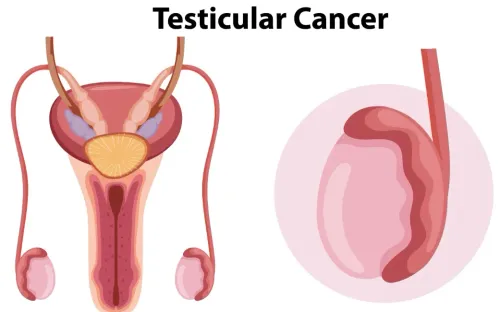
Testicular cancer is relatively uncommon, but it is an important condition to recognise because it can occur in younger and otherwise healthy men. A new or persistent change in a testicle should not automatically be assumed to be cancer, but it should also not be ignored.
Several non-cancerous conditions can cause a testicular lump, swelling, discomfort or change in size. A urological examination and appropriate imaging can help determine the cause.
What Can Testicular Cancer Feel Like?
Testicular cancer may sometimes cause very few symptoms in its early stages. In many cases, the first noticeable change is a change in the testicle itself.
Possible symptoms include:
A new lump or swelling in a testicle
Enlargement of one testicle
A feeling of heaviness in the scrotum
A change in the firmness or consistency of a testicle
Persistent discomfort or aching
A change in the size or shape of the testicle
Scrotal swelling that does not settle
Importantly, these symptoms do not necessarily mean cancer. Conditions such as epididymal cysts, hydrocele, varicocele, infection or inflammation can produce similar symptoms.
Why Can a Painless Lump Matter?
A common misconception is that a serious testicular problem must cause severe pain.
Testicular cancer may present as a painless testicular lump or change in consistency. Therefore, waiting for pain to appear before seeking medical advice is not advisable.
Men should be familiar with the usual size, shape and consistency of their testicles. A new persistent change deserves assessment.
How Is a Testicular Lump Evaluated?
Assessment usually begins with a medical history and physical examination.
Depending on the findings, a urologist may recommend:
Scrotal ultrasound, usually with Doppler when appropriate
Urine or blood investigations when indicated
Serum tumour markers in patients with suspected testicular malignancy
Further imaging or specialist evaluation if cancer is suspected
The purpose of evaluation is not simply to determine whether a lump is present, but to establish whether it is arising from the testicle itself and what its likely cause may be.
Can Testicular Cancer Occur in Young Men?
Yes. Testicular cancer can occur in relatively young adults. Being young, physically active or otherwise healthy does not completely exclude the possibility.
Certain medical and personal factors may increase risk, but a man does not need to have an obvious risk factor to develop testicular cancer.
Do Not Rely on Self-Diagnosis
A testicular lump cannot reliably be diagnosed by appearance or by searching symptoms online.
Infections, cysts, hydrocele, varicocele, trauma and other benign conditions can sometimes produce similar symptoms.
A clinical examination followed by appropriate imaging provides a much clearer assessment.
When Should You See a Urologist?
Arrange a urological assessment if you notice:
A new testicular lump
Persistent enlargement of one testicle
A change in testicular firmness
Persistent heaviness or discomfort
An unexplained change in testicular shape or size
Scrotal swelling that does not resolve
Sudden severe testicular pain is different and requires urgent medical assessment, because conditions such as testicular torsion can be time-sensitive emergencies.
For patients seeking urological evaluation in Kurla and surrounding areas of Mumbai, Dr Zaffar K. Sayed provides assessment of testicular, scrotal and other male urological conditions, with investigations recommended according to the clinical findings.
Key message
A testicular lump does not automatically mean cancer. However, a persistent or unexplained testicular change should be properly evaluated rather than ignored.
Keywords